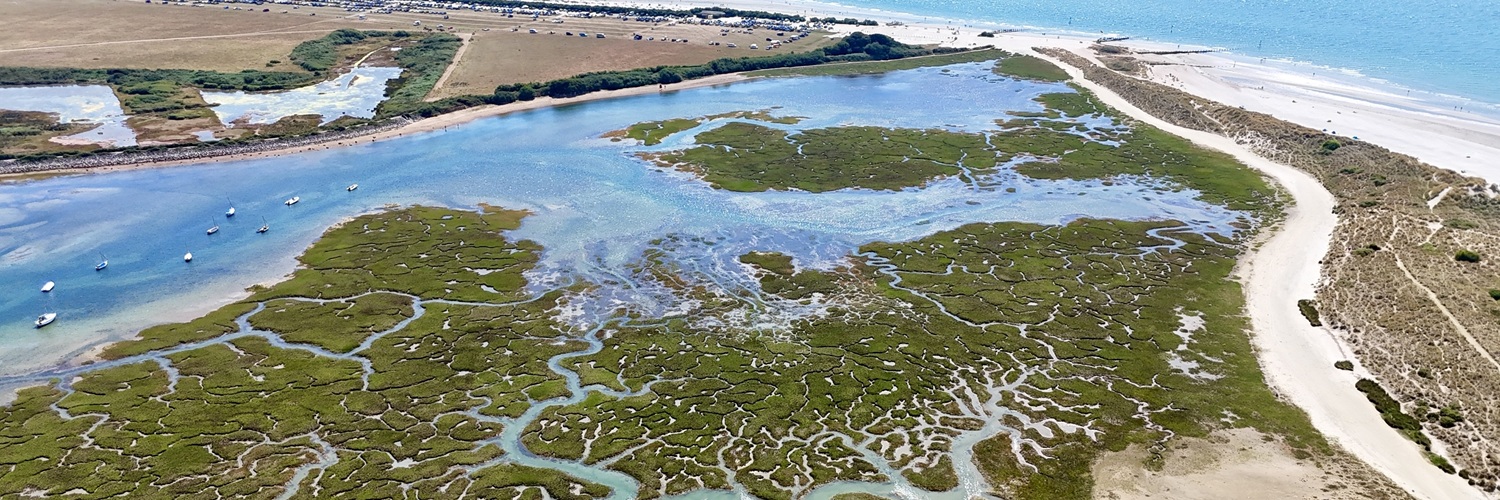
Georgina Banfield and Professor Jo Preston of the University of Portsmouth are the lead authors of a new scoping review, Seascape Restoration Network. Assessing the need, value and scope of establishing a Seascape Restoration Network to meet our biodiversity and climate goals.
The study found strong support for establishing a Seascape Restoration Network to help enable marine restoration at the scale needed to meet biodiversity and climate goals.
The idea emerged from Seascape Symposium II: Reconnecting the Seascape, held at ZSL in June 2025 as one of the outputs of IFB Phase I. During the symposium, participants were surveyed about the need, value and potential scope of a new Seascape Restoration Network (SRN).
Those taking part represented a broad range of sectors, including science and research, restoration practice, government and regulation, consultancy and finance.
When asked whether a Seascape Restoration Network was required to facilitate marine restoration to meet biodiversity and climate goals, 88% of respondents said yes. A further 12% responded “maybe”, while none said no.
The results demonstrate considerable interest in developing a network that could bring together the different organisations and disciplines involved in restoring coastal, estuarine and marine environments.
The resulting scoping review explores what such a network could look like, including its geographical scope, the habitats it would cover and how it might be structured. It also considers the potential value and functions of the network and sets out a proposed vision:
“To enable large-scale, multiple habitat coastal, estuarine and marine restoration to restore ecological connectivity, resilience and biodiversity to deliver nature policy goals.”
The emphasis on multiple habitats is particularly important. Rather than considering individual restoration projects or habitats in isolation, the proposed network would support a broader seascape approach, recognising the importance of ecological connectivity and the potential benefits of restoration across coastal and marine environments.
The strong response from symposium participants provides a clear foundation for taking the idea forward and exploring how a Seascape Restoration Network could help connect expertise, experience and activity across the marine restoration community.